
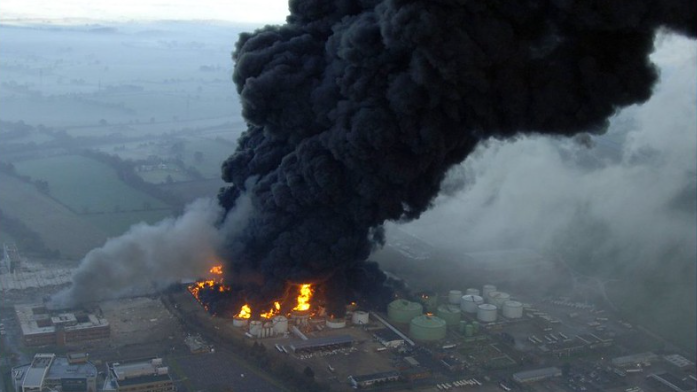
20 years ago this month, there was an explosion at the Buncefield Oil Terminal just north of London. It measured 2.4 on the Richter scale, was heard as far away as The Netherlands and turned the sky dark in London for days. I worked on the communications response for four years from the initial incident, through the various stages of the official investigation and finally the legal cases to determine who was liable.
The incident
When you have a major incident such as this, the emergency services take over your site until it is deemed safe. The underground pipe supplying fuel from the Lindsey Refinery was turned off and the advice of the Fire Service was to let the fire burn itself out. However, with the fire continuing to burn and the M1 motorway closed because of the smoke, the UK Government came under pressure to be seen to be doing something and so ordered the Fire Service to bring in firefighters and firefighting foam from all over the country to put the fire out.
The impact
The explosion took place at 6am on a Sunday morning which meant that there was hardly anyone working in the industrial estate opposite at the time and so, although there were some minor injuries, thankfully, there were no fatalities. However, homes were damaged, with residents needing temporary accommodation. There were also businesses on the estate that were badly affected, as were the commercial customers of the fuel terminal:
- The terminal supplied airlines at Heathrow Airport which now didn’t have enough fuel, so planes had to refuel in places like Paris or Brussels before landing in London.
- Service stations in South East England started to run out of fuel.
- McDonald’s was short on burger buns from the bakery on the industrial estate.
- The fashion retailer ASOS temporarily ceased trading because its warehouse was destroyed.
- There was a shortage of alcoholic drinks in the run up to Christmas because the warehouse of a major distiller/brewer was damaged.
The initial response
I worked for Chevron which co-owned the terminal with Total, who also operated the site. Both companies only had two or three people in their UK PR teams and we had 350 media calls in the first few days from:
- Local media wanting to know about the impact on their community and the support given to those affected.
- International business editors and newswires wanting to know the potential costs.
- Insurance trade press wanting to know who had insured the site.
- Legal trade press wanting to know who was handling the litigation.
- Airline and forecourt trade press wanting to know when supplies were being restored.
- A Greek TV station asking what guarantees we could give that a similar incident couldn’t happen at the terminal in their community.
Outcome
After the fire was put out, repairs were made and supplies gradually returned to normal. The official investigation found that a fuel tank was being filled from an underground pipe from the refinery and an indicator showing fill level had failed, as had an automatic shut-off switch which meant that the tank overfilled, causing a cloud of fuel around the tank which ignited. In the legal cases that followed, Total, who were the majority owner of the site and operated it with their staff and systems, were found liable.
Communications lessons learned
- The moral as well as the legal – we could have done nothing after the explosion because the official investigation hadn’t even started yet, but when people are homeless and businesses destroyed, you step in and help.
- Build relationships with stakeholders around your facilities – as this was a joint venture, we had made less effort to build relationships with local stakeholders than if it was a wholly-owned facility. In hindsight, this was a mistake. We didn’t know the local MP, and he had a slim majority and so frequently criticised us.
- Short approval processes – the business area, legal and comms teams worked closely together to get responses from the company drafted, approved, and given to journalists before their deadlines. It’s better to have a fairly good response in time for the BBC’s News at Six than a perfect statement half an hour later.
- Get back-up resources – Chevron and Total only had small PR teams and so we used an agency to provide additional people to help with the incident response.
- Limit the reputational damage – one of the smartest ideas was to turn the joint venture holding company (Hertfordshire Oil Storage Ltd or HOSL) into a real company. Within a short time after the incident, HOSL had a new logo, a spokesperson, a website, and media and community enquiries were handled by the HOSL team. This meant that HOSL was quoted and criticised, reducing the reputational impact on the Chevron and Total corporate brands.
- Maintain professionalism – one of the things I am most proud of is maintaining a good relationship with the communications team at Total. Even though our firms were in a legal dispute about liability, we still had a job to do to represent the joint venture and worked well together.
I was at a Corporate Affairs Summit recently and there was a discussion about the tangible value that communicators deliver both from opportunities gained and issues avoided. With Buncefield, an issue was definitely avoided for my employer as Chevron was found not liable and so the combined efforts of the Communications, Legal and Fuel Terminal teams saved the company around £400m in costs.